What Is Open Banking?
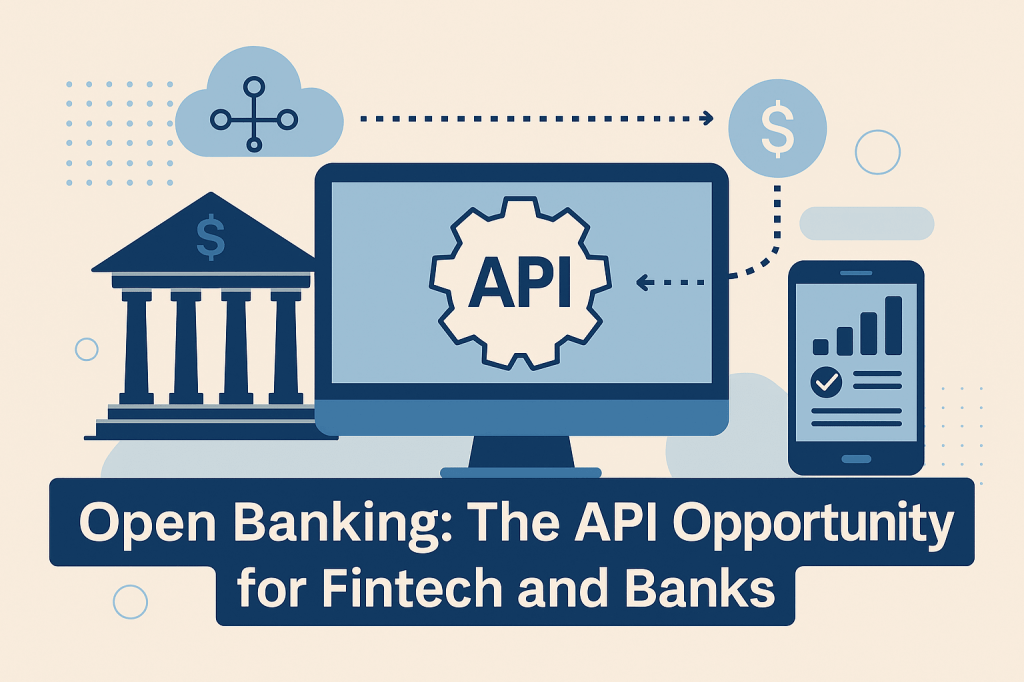
Open banking is a regulated financial services practice that allows consumers to securely share their financial data with third-party providers through APIs (Application Programming Interfaces). This data may include account balances, transaction histories, and payment details. What makes open banking revolutionary is that it gives consumers control over their own data—something that was previously locked within their bank’s systems. By giving explicit consent, customers can enable fintech apps to deliver tailored services, such as budget planners, credit score monitoring, or direct payment options, all without switching banks.
Why APIs Are Central
APIs are the backbone of open banking. An API acts like a digital gateway that allows two systems to communicate securely. When a customer authorizes a fintech app to access their banking information, the app sends an encrypted request to the bank via an API. The bank verifies the request and returns only the data that the user approved. This process replaces outdated and unsafe methods like screen scraping, which involved sharing login credentials. APIs also support real-time data exchange, robust authentication, and fine-grained permission settings, which make open banking both secure and scalable.
Key Drivers Behind Open Banking
- Consumer Empowerment: Users gain ownership and control over their financial data, allowing them to make informed decisions and switch services easily.
- Financial Innovation: Fintech startups can build new, customer-focused solutions by accessing bank data through regulated APIs.
- Regulatory Push: Governments and regulators around the world, such as the UK’s CMA and the EU’s PSD2 directive, are encouraging open banking to enhance competition and transparency in financial services.
Global Adoption Trends
The adoption of open banking is growing globally. In the United Kingdom, it’s mandated and mainstream. In the European Union, PSD2 has made open banking a legal requirement. Australia and Brazil have launched similar initiatives, and countries like Canada and India are actively exploring frameworks. Meanwhile, the United States is moving towards industry-driven models. This global momentum indicates that open banking isn’t just a regional trend—it’s a fundamental shift toward customer-centric finance.
How Open Banking APIs Work
Consent-Based Access
The foundation of open banking is user consent. When a customer wants to use a third-party financial service—such as a budgeting app—they’re asked to grant permission for access to their banking data. This permission is specific, time-bound, and revocable. The process begins when the user authenticates through their bank’s secure portal. Once verified, the bank issues a digital token that allows limited access to the data. This ensures that only the information the user agrees to share is available to the third-party provider (TPP), maintaining full transparency and privacy.
Role of APIs in the Data Exchange
APIs act as structured, secure communication pathways that enable the sharing of data between a bank and an external application. These APIs follow strict industry protocols, such as REST or GraphQL, and are governed by frameworks like OAuth 2.0 for authorization and OpenID Connect for identity verification. By using APIs, banks avoid risky methods like screen scraping, which previously required users to share their login credentials. The result is a more secure, scalable, and user-consented ecosystem where fintech apps can interact with banking systems in real-time without compromising user trust or data security.
Security Protocols in API Transactions
- Token-Based Authentication: Instead of passwords, APIs use temporary tokens that limit access and can be revoked any time.
- Encryption: Data shared between banks and third-party apps is encrypted in transit and at rest to prevent tampering or theft.
- Granular Permissions: APIs are designed to limit access only to the type of data or transaction authorized by the user.
Comparison: Traditional vs. API-Based Data Sharing
- Traditional Screen Scraping: Involved sharing personal login details and gave third parties full access to a user’s account—often without clear boundaries or visibility.
- API-Driven Open Banking: Uses secure, consent-driven methods that limit access, offer transparency, and align with privacy regulations. APIs are audited, standardized, and monitored to ensure consistent performance and safety.
Benefits of Open Banking
For Consumers
Open banking places consumers at the center of the financial ecosystem. By enabling secure data sharing, it offers users more control, better tools, and customized services. Consumers can now view all their financial accounts from different institutions in a single dashboard, enabling better financial visibility and planning. Budgeting apps, smart saving tools, and instant credit checks are all powered by open banking APIs. This means less paperwork, faster processing times, and financial solutions that adapt to individual needs and goals.
For Fintech Innovators
Fintech companies thrive on innovation and speed. Open banking APIs provide them with real-time access to valuable banking data, reducing the need to build full infrastructures from scratch. This allows startups to quickly develop financial products such as digital wallets, automated savings apps, and lending platforms. It also supports advanced features like income verification, transaction categorization, and real-time fraud detection. With these capabilities, fintechs can focus on building unique user experiences and differentiate themselves in a competitive market.
For Banks and Financial Institutions
Traditionally seen as gatekeepers of financial data, banks are now shifting toward being service platforms. Through open banking, they can offer secure APIs that allow controlled access to their systems while maintaining regulatory compliance. This transformation opens new revenue channels as banks can monetize their APIs and offer value-added services to third parties. Moreover, collaborating with fintechs helps banks expand their digital offerings and reach new customer segments without large internal investments. Open banking, therefore, becomes a catalyst for digital transformation and ecosystem growth.
Use Cases and Real-World Examples
Personal Finance and Budgeting
Open banking has enabled a new generation of personal finance apps that help users take control of their money. By connecting to multiple bank accounts through APIs, these apps offer users a unified view of their income, spending, and savings. Budgeting tools automatically categorize transactions, alert users about overspending, and suggest ways to save. This empowers people to manage finances more effectively, track subscription costs, and set realistic financial goals—all from a single platform.
Bank Payments and Checkout
Merchants are integrating open banking APIs to accept direct bank payments at checkout. Unlike card payments, these transactions are processed instantly, with lower fees and no intermediaries. For users, this means fewer steps, more security, and no need to enter sensitive card data. For businesses, it leads to reduced fraud risk and improved cash flow. Open banking is helping reshape the future of online and mobile payments by offering fast, seamless, and secure alternatives to traditional gateways.
Credit Scoring and Lending
Lenders can now use real-time bank data to assess creditworthiness with greater accuracy. Instead of relying solely on credit scores, fintechs and banks can analyze spending habits, income patterns, and financial behavior to offer smarter loans. This enables fairer access to credit, especially for people with little or no credit history. Automated underwriting processes reduce wait times, eliminate paperwork, and allow instant lending decisions—boosting convenience for both lenders and borrowers.
Corporate Treasury and Cashflow
Large enterprises are leveraging open banking APIs to gain real-time visibility into their financial positions. By integrating APIs into ERP or treasury systems, companies can view balances across multiple banks, schedule payments, and reconcile transactions—all in real-time. This automation boosts accuracy in financial reporting and enhances liquidity management. APIs also help reduce manual interventions, mitigate human error, and improve strategic decision-making in finance departments.
Strategic API Trends
Unbundling Traditional Banking Services
Open banking is driving a trend where traditional banking services—like payments, loans, identity verification, and savings—are being offered individually through APIs. This unbundling allows fintech companies to mix and match specific banking functionalities without building full banking platforms. For example, a budgeting app may use a third-party loan API or integrate with a savings platform, while maintaining its own user interface and branding. This modularity allows faster innovation, personalized user experiences, and cost-effective product development.
Rebundling via Banking-as-a-Service (BaaS)
As services become unbundled, a new wave of rebundling is emerging under the concept of Banking-as-a-Service. BaaS platforms allow fintechs, retailers, and even non-financial brands to embed banking functions into their own products using APIs. A ride-sharing app, for instance, can offer drivers a digital wallet or a savings account—all powered by a BaaS provider behind the scenes. These platforms handle licensing, compliance, and core infrastructure, freeing up companies to focus on user experience. BaaS is transforming banks into infrastructure providers and allowing any company to offer financial services.
Challenges and Security Considerations
Privacy and Consent Management
One of the biggest concerns in open banking is data privacy. While APIs enable data sharing, the process must be strictly controlled. Users need clear, user-friendly consent flows that show what data will be shared, with whom, for how long, and for what purpose. Consent should be granular and revocable at any time. Financial service providers must implement dashboards that allow users to manage their permissions easily. Without strong privacy practices, user trust—and regulatory compliance—can quickly be compromised.
Fraud and Risk Exposure
As more third-party apps interact with sensitive financial data, the risk of fraud increases. While APIs offer better security than screen scraping, attackers may still target weak integrations or exploit stolen tokens. Phishing, fake apps, and account takeovers remain active threats. Financial institutions and fintechs must use real-time monitoring, risk scoring, and fraud detection systems to mitigate these risks. Educating users about safe digital habits is also essential in minimizing fraudulent activity across the ecosystem.
API Security Best Practices
- Strong Authentication: All API requests should be authenticated using OAuth 2.0 or similar protocols, ensuring only authorized access is granted.
- Rate Limiting: Prevent abuse by capping how often clients can call APIs. This guards against denial-of-service attacks and resource exhaustion.
- Encryption and Data Protection: Use TLS (Transport Layer Security) to encrypt data in transit. Sensitive fields should also be masked or encrypted at rest.
- Audit Trails: Maintain logs of all API access and user interactions. This is crucial for incident response and regulatory audits.
- Sandbox Environments: Offer developers a safe testing space that mimics production APIs without exposing real data.
Regulatory Complexity
While open banking is expanding globally, regulations vary by region. Europe enforces it through PSD2, while countries like the UK have additional standards under the CMA. Brazil and Australia have similar frameworks, but the U.S. lacks a unified policy, leading to fragmented adoption. This regulatory inconsistency makes it challenging for fintechs and banks to build global solutions. Companies must navigate overlapping rules on data privacy, consent, and liability, which often require localized API configurations and compliance strategies.
Current Trends and Market Developments
Global API Adoption
Around the world, open banking is no longer experimental—it’s becoming mainstream. In the UK, over 7 million consumers and small businesses are using services powered by open banking. Europe, under PSD2, has seen widespread compliance and API integrations. Brazil has launched a phased model for open finance, and Australia’s Consumer Data Right (CDR) extends even beyond banking. Emerging economies are also exploring frameworks. This momentum highlights a global shift toward user-centric, interoperable financial systems built on standardized APIs.
Monetization and Business Models
Banks are beginning to realize the revenue potential of their APIs. By offering premium APIs to fintechs, corporate clients, and developers, banks can charge fees for high-value features like identity verification, real-time payments, or analytics. This marks a strategic shift from being closed institutions to open, data-driven platforms. However, monetization must be balanced with accessibility. Overcharging for data access could hinder innovation and create barriers for smaller fintech startups that rely on these APIs to build and scale.
Shifting Bank-Fintech Dynamics
Open banking is changing how banks and fintechs interact. Instead of competing for the same customers, they’re increasingly collaborating. Banks provide the infrastructure, trust, and compliance; fintechs bring agility, design, and niche innovation. Together, they can offer more comprehensive financial services—faster and cheaper. This partnership model is becoming the foundation of many successful open banking ecosystems, especially in regions where regulators encourage collaborative growth and API standardization.
The Future of Open Banking and the Conclusion
Looking Ahead
Open banking is not just a passing innovation—it’s a structural evolution in the financial industry. As technology matures and regulatory frameworks become more standardized, open banking will expand into “open finance,” encompassing investment, insurance, and pension data. Consumers will benefit from even more personalized services and competitive offerings. Fintechs will build smarter, AI-powered solutions, and banks will increasingly transition from service providers to infrastructure enablers. Global financial systems are steadily moving toward a model where APIs serve as the default layer for innovation, access, and control.
Partnering with the Right Fintech Development Company
To harness the full potential of open banking, businesses must work with experienced technology partners who understand both the technical and regulatory complexities. Whether you’re launching a fintech startup or modernizing a bank’s API platform, a skilled development team ensures your systems are secure, scalable, and compliant. If you’re looking to develop an open banking product or integrate APIs into your financial services, partnering with a proven fintech app development company can accelerate your vision. They can guide your digital transformation, reduce risk, and help you innovate confidently in this fast-changing landscape.
 Fintech Knowledge
Leave a comment